
AI in Real Estate: Smarter Buyer Matching and Market Forecasting

Ridhima Nigam
Real estate decisions depend on timing, data precision, and deep understanding of buyer intent. Discover how artificial intelligence is transforming PropTech through hyper-personalized buyer matching algorithms, predictive market forecasting, and automated brokerage workflows.
AI is Transforming Real Estate Discovery and Forecasting
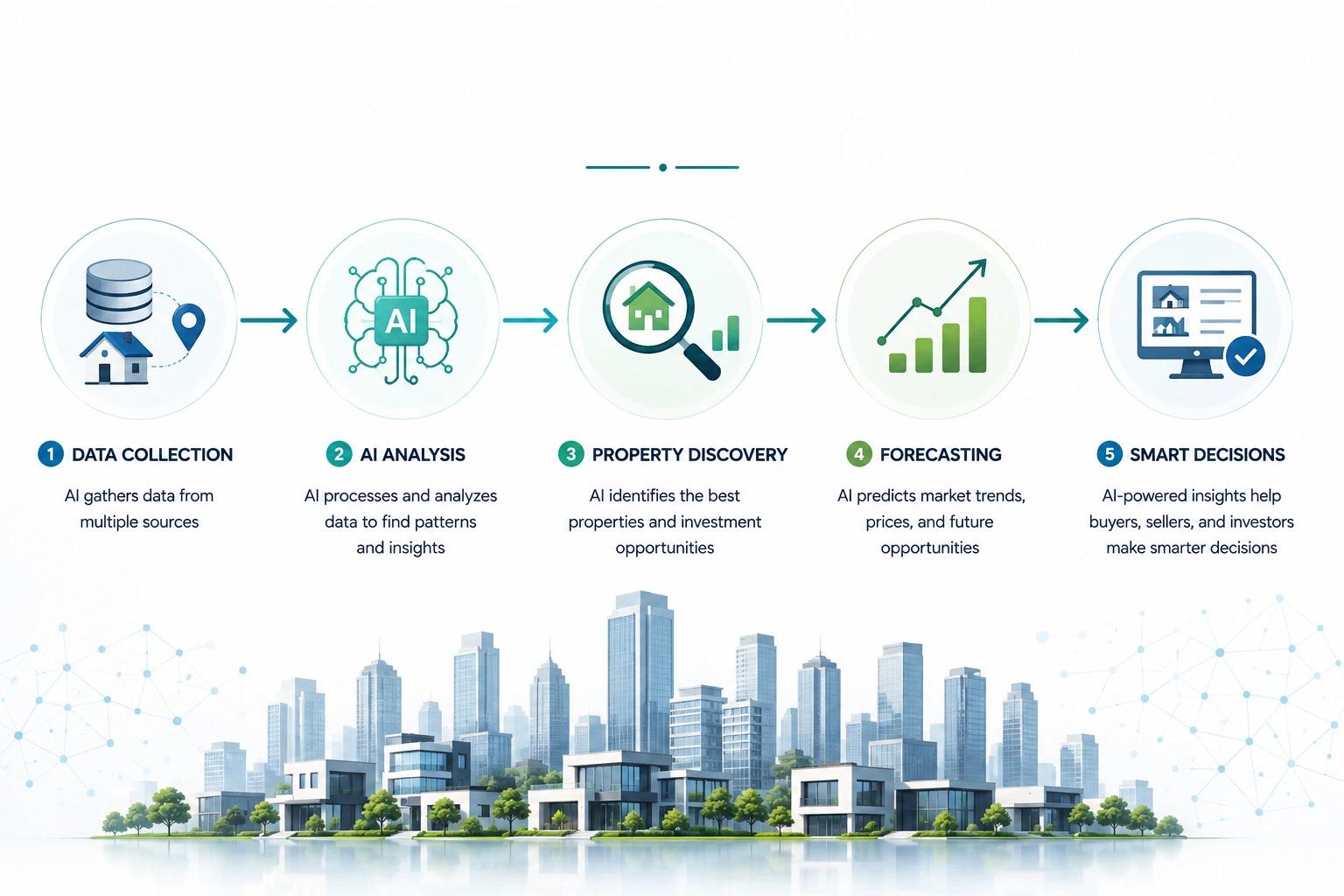
• AI transforms real estate from static listing directories into dynamic, predictive intelligence ecosystems. • Machine learning algorithms analyze buyer behavior in real time to suggest properties that match subtle lifestyle and financial preferences. • Predictive analytics process macroeconomic indicators, regional zoning, and historical pricing to forecast market trends before they emerge. • Automated lead scoring and 24/7 conversational agents qualify prospects instantly, eliminating cold outreach delays. • Real estate firms adopting AI accelerate deal velocity, minimize investment risk, and deliver hyper-personalized customer journeys.
How Do AI Buyer Matching Algorithms Work?
AI buyer matching algorithms use vector embeddings and machine learning to analyze buyer search interactions, dwell time on photos, saved floorplans, price tolerance, and commute preferences. Instead of relying on static keyword filters, AI dynamically calculates compatibility scores between buyer profiles and real-time property listings.
Rule-Based Filtering vs. AI Semantic Matching
Key Data Signals in Modern AI Recommendation Engines: • Behavioral Intent & Browsing Dynamics: Tracking click streams, virtual tour interactions, photo viewing duration, and repeated feature inspections. • Financial Feasibility & Buying Power: Evaluating mortgage pre-approval parameters, down payment flexibility, and dynamic price sensitivity curves. • Hyper-Local Lifestyle Indicators: Correlating commute times, proximity to schools, transit access, and neighborhood amenities with buyer lifestyle criteria. • Micro-Timing & Purchase Readiness Signals: Detecting immediate readiness-to-buy patterns based on inquiry velocity and communication responsiveness.
Predictive Analytics: Anticipating Real Estate Market Trends & Pricing
Real estate valuations and investment strategies are historically reactive, relying on 30- to 90-day-old comparable sales (comps). Predictive AI analytics synthesize millions of disparate data points - interest rate fluctuations, migration corridors, building permit filings, and employment growth - to anticipate market shifts months ahead.
Core Applications of Predictive Market Forecasting: • Hyper-Local Price Trend Prediction: Forecasting median price movements down to specific neighborhoods and zip codes with granular seasonal adjustments. • High-Growth Appreciation Mapping: Identifying emerging real estate hotspots early by analyzing infrastructure investments, commercial permits, and population inflows. • Automated Valuation Models (AVMs): Generating real-time, unbiased property valuations by combining spatial data, tax assessments, renovations, and market velocity. • Supply-Demand & Inventory Imbalance Alerts: Alerting developers, investors, and brokerages to upcoming inventory shortages or oversaturated sub-markets.
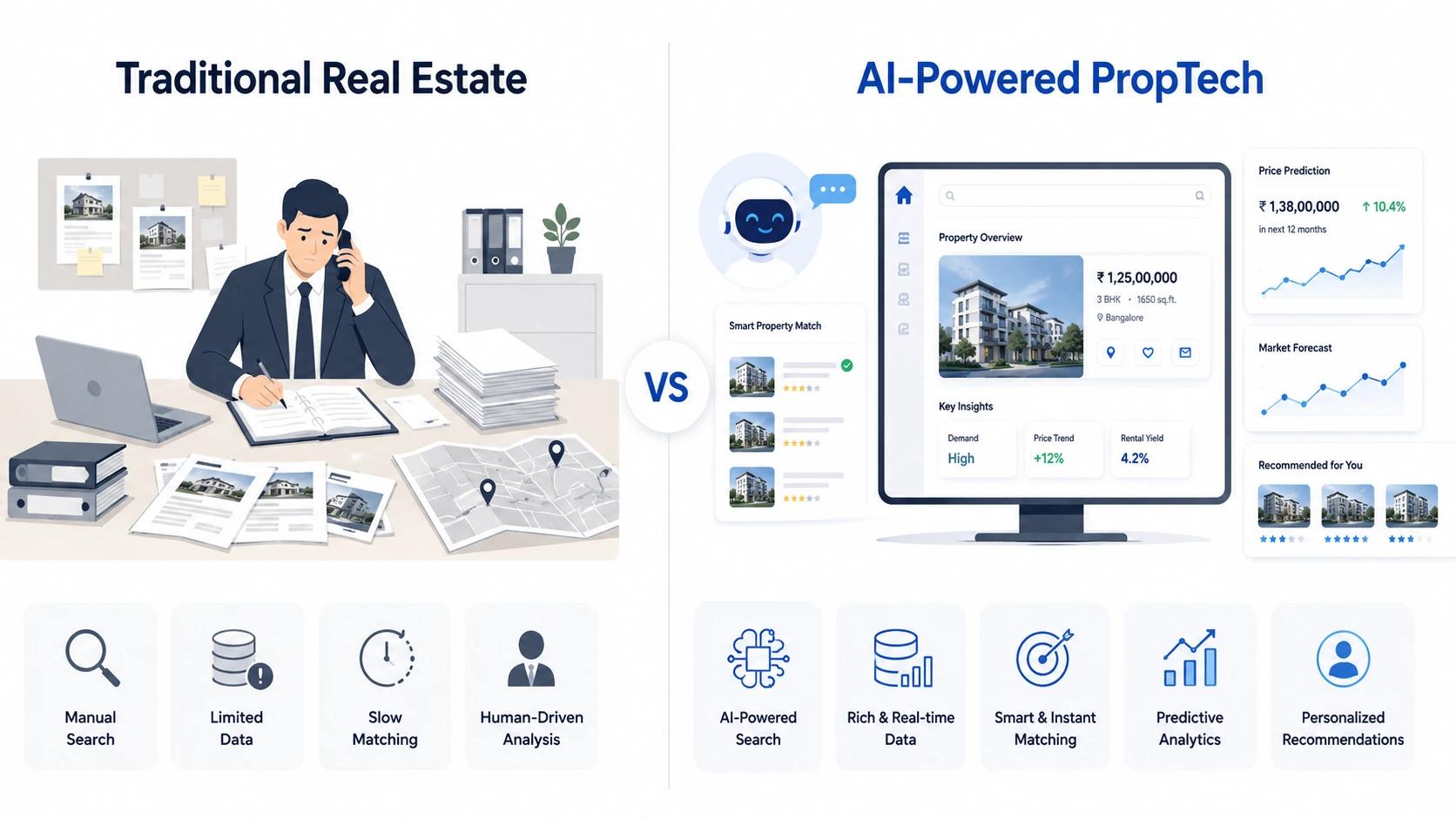
Traditional Real Estate vs. AI-Powered PropTech Platforms
| Feature / Capability | Traditional Real Estate | AI-Powered PropTech Platforms |
|---|---|---|
| Buyer Matching | Manual search filters & agent guesswork | Vector embeddings & behavioral recommendation engines |
| Market Valuation | Lagging historical comps (30–90 days old) | Real-time predictive AVMs & multi-variable modeling |
| Lead Qualification | Slow manual form reviews & cold calling | 24/7 conversational AI with instant intent scoring |
| Document Processing | Manual contract review & error-prone data entry | Intelligent OCR, clause extraction & compliance parsing |
| Market Opportunity Detection | Reactive observation after price spikes occur | Proactive micro-market trend detection & appreciation forecasts |
Capturing High-Intent Leads Through 24/7 Conversational AI
Modern property shoppers expect immediate, informative responses at any hour. Conversational AI agents and intelligent chatbots embedded in real estate portals bridge the gap between initial curiosity and deal execution.
• 24/7 Instant Buyer Inquiry Triage: Answering complex questions regarding HOA fees, school ratings, zoning rules, and financing options in real time. • Dynamic Lead Scoring & Budget Qualification: Evaluating buyer timeline, pre-approval status, and purchase urgency to route top-tier prospects directly to senior agents. • Automated Tour Scheduling & Calendar Sync: Coordinating private viewings, open-house visits, and virtual walkthroughs without back-and-forth messaging. • Continuous Feedback Loop to Recommendation Models: Feeding chat conversation preferences and buyer objections directly back into the recommendation algorithm.
Automating Brokerage Operations With Intelligent OCR & Document Workflows
Real estate transactions generate substantial documentation, from title deeds and inspection reports to mortgage disclosures and lease contracts. Intelligent Document Processing (IDP) and AI-powered OCR automate these manual bottlenecks.
| Brokerage Process | How Intelligent OCR Helps | Business Impact |
|---|---|---|
| Property Documents | Extracts property details automatically | Faster processing |
| Client Onboarding | Captures IDs and customer information | Quicker onboarding |
| Contracts & Agreements | Identifies key terms, dates, and clauses | Easier contract review |
| Invoice Processing | Extracts amounts and payment details | Faster payments |
| Compliance Documents | Detects missing or incorrect information | Lower compliance risk |
| Document Management | Converts documents into searchable data | Easy information access |
• Automated Lease & Title Deed Data Extraction: Extracting critical terms, renewal dates, covenants, and financial liabilities with 99%+ accuracy. • Instant Compliance & Verification Checks: Flagging missing signatures, non-compliant clauses, or conflicting terms before contracts reach escrow. • Cross-Platform MLS and CRM Synchronization: Syncing listing changes, price reductions, and status updates across Multiple Listing Services (MLS) and CRM databases automatically. • Accelerated Closing Timelines: Reducing transaction friction and closing paperwork delays from weeks to mere days.
Enterprise Cloud Infrastructure and AIOps for PropTech Scalability
PropTech platforms experience massive traffic spikes during new development launches, seasonal buying peaks, and promotional campaigns. Leveraging modern public cloud architecture, DevOps, and AIOps guarantees rock-solid reliability.
Real-World Example: AIOps Auto-Scaling for PropTech
Output:
How This Applies to PropTech
12,500 buyers searching properties → CPU reaches 87% → AIOps detects high demand → cloud capacity scales from 4 to 8 servers.
- An enterprise PropTech platform can use cloud infrastructure and AIOps to respond to sudden buyer traffic while maintaining fast property searches and application performance.
- In production, monitoring signals from tools such as Kubernetes or cloud monitoring would connect to an autoscaling system rather than directly creating servers inside the Python function.
- Predictive Auto-Scaling for Listing Surges: Dynamically scaling cloud compute resources to handle high-concurrency property searches without latency.
- Real-Time Spatial Data Pipelines: Streaming geospatial, GIS, and demographic data feeds into machine learning pipelines with sub-second latency.
- Self-Healing Infrastructure (AIOps): Automatically detecting microservice bottlenecks, query slowdowns, or API failures before users notice service disruption.
- Enterprise Data Security & Encryption: Protecting sensitive buyer financial records, credit verifications, and transaction details with end-to-end cloud encryption.

Responsible AI & Ethical Governance in Real Estate
Because real estate decisions directly influence housing access, wealth creation, and community development, ethical AI governance is paramount. AI implementations must strictly follow Fair Housing regulations and transparent algorithmic principles.
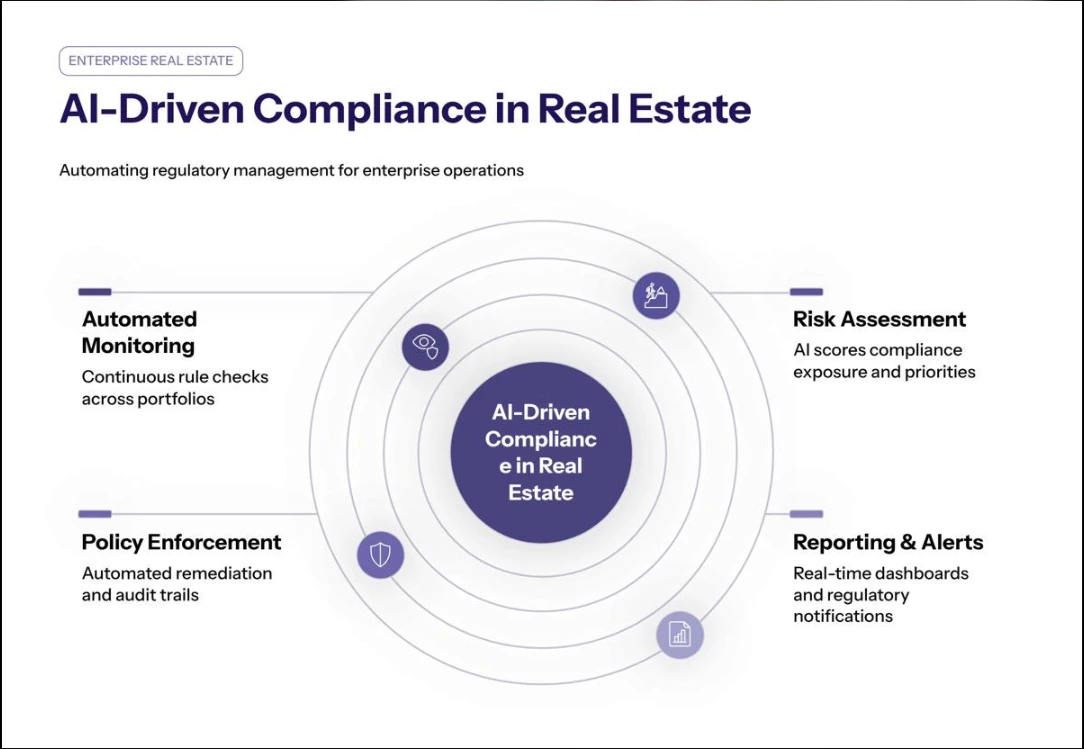
AI makes real estate compliance faster, smarter, and more proactive.
- Continuously monitors real estate regulations and compliance requirements
- Identifies potential compliance risks before they escalate
- Automatically enforces governance policies and audit controls
- Delivers real-time alerts and regulatory notifications
- Reduces manual effort and operational risk across enterprise portfolios
• Fair Housing Compliance & Bias Auditing: Ensuring matching algorithms never discriminate based on race, religion, gender, familial status, or protected classes. • Explainable Automated Valuations (XAI): Providing clear rationales and data transparency for how automated appraisal values and price estimates are derived. • Data Privacy & Consumer Consent: Safeguarding user browsing behavior and financial credentials in compliance with global data privacy standards.
Conclusion: Building Smarter, Future-Ready Real Estate Platforms
Artificial intelligence is no longer an experimental luxury in real estate - it is the core engine powering next-generation property matching, precise market forecasting, and high-margin brokerage operations. Firms that combine intelligent buyer recommendations with predictive market insights will consistently outperform traditional competitors. At Starling Elevate IT Solution, we architect and deploy enterprise-grade AI platforms, intelligent recommendation engines, and custom PropTech solutions tailored to modern real estate organizations.

Adopt AI-driven real estate solutions that connect the right buyers to the right properties while staying ahead of market shifts with confidence.
Get StartedFrequently Asked Questions
AI analyzes multi-dimensional data including browsing history, visual photo engagement, budget flexibility, and commute preferences to create behavioral compatibility scores, matching buyers with properties that fit their lifestyle far more effectively than static filters.
Table Of Contents

Driving Innovation and Impact
With engineering leadership and a proven delivery model, our journey is marked by a relentless pursuit of excellence and a commitment to driving measurable ROI for our clients across 10+ diverse industries.
Let's Connect