
How AI Is Helping Restaurants Reduce Food Waste and Improve Profitability

Divya Soni
Food waste is one of the biggest profit leaks in the restaurant industry. Over-ordering ingredients, inaccurate demand forecasting, poor inventory visibility, and manual planning often lead to excess stock, spoilage, and rising operational costs.
The Food Waste Challenge in Restaurants
Modern restaurants need smarter systems that go beyond traditional POS and inventory tools. This is where AI-powered restaurant management solutions, like Foodygent, are transforming how restaurants operate helping them reduce waste while improving profitability.
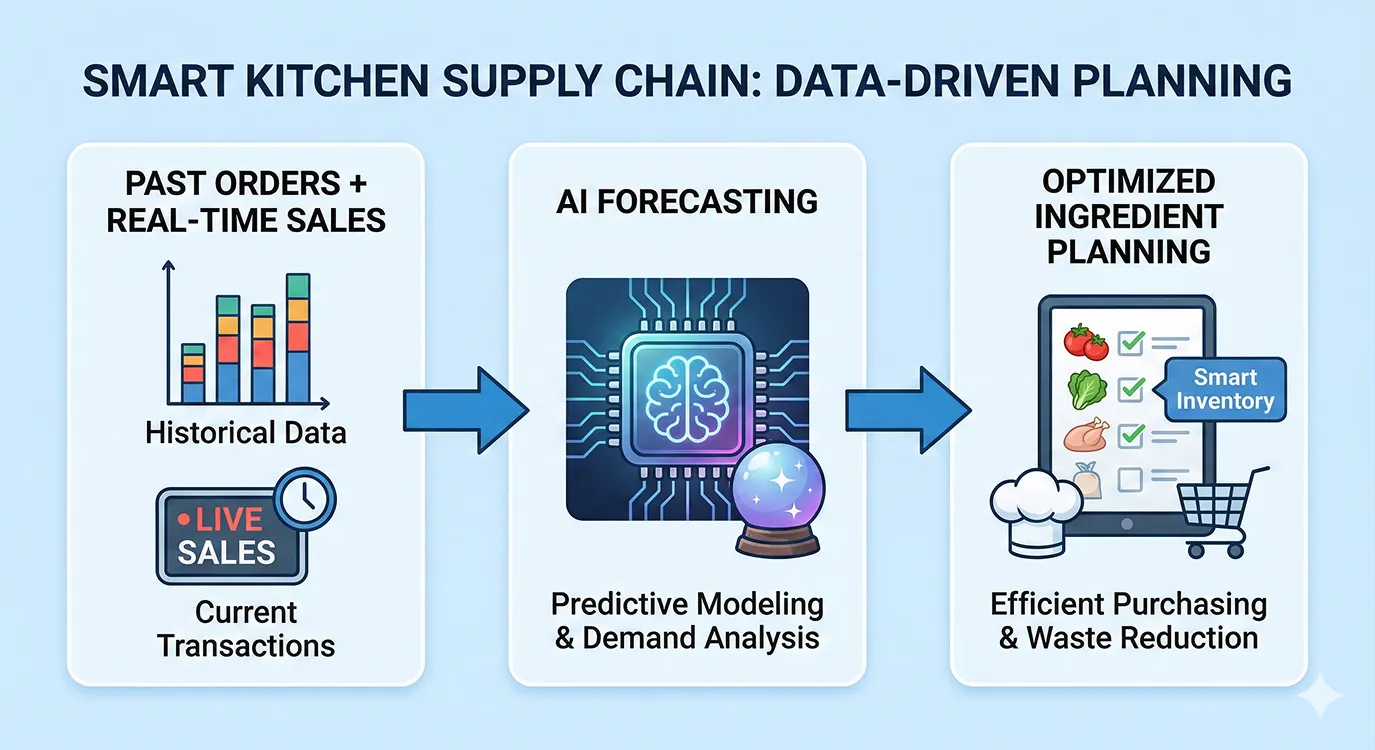
Smarter Demand Forecasting With AI
Customer demand in restaurants fluctuates daily based on time, location, weather, events, and ordering trends. Static forecasting methods fail to keep up.
AI-driven demand planning helps restaurants:
- Predict daily and weekly ingredient requirements
- Adjust purchasing based on real-time sales patterns
- Reduce overstocking and emergency restocking
- Align preparation with actual customer demand

With AI, inventory decisions are based on live data, not assumptions.
AI-Powered Inventory Management
Manual inventory tracking often leads to errors and delayed actions. AI-enabled inventory systems continuously monitor stock movement and usage.
Benefits include:
- Real-time visibility into ingredient levels
- Automated low-stock and expiry alerts
- Smarter replenishment recommendations
- Reduced spoilage and dead inventory
In Foodygent, AI ensures ingredients move efficiently from storage to plate without waste.
Reducing Waste Through Smart Menu Insights
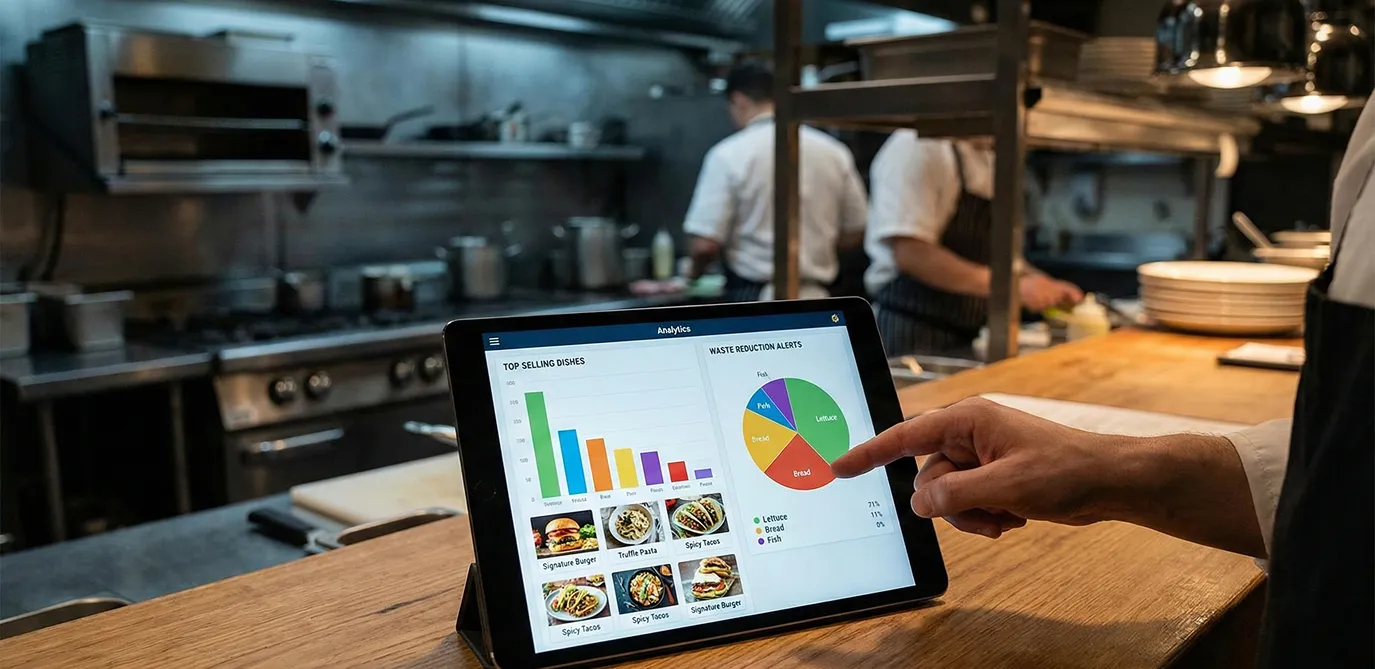
Not every menu item performs equally. AI analyzes sales data to identify:
- Low-performing dishes causing ingredient waste
- Popular items that need better stock prioritization
- Seasonal and location-based preferences
Restaurants can optimize menus, portion sizes, and ingredient sourcing—directly impacting profitability.
Workflow Automation Across Kitchen & Procurement
Disconnected teams and manual coordination slow down operations. AI-powered workflow automation brings procurement, kitchen staff, and managers onto one system.
Automation helps by:
- Triggering purchase orders automatically
- Coordinating kitchen prep with demand forecasts
- Reducing manual follow-ups and errors
- Responding quickly during peak hours
This creates smoother operations and better cost control.
Improving Accuracy With OCR & Data Digitization
Many restaurants still rely on handwritten supplier bills and manual records. OCR-based handwritten text extraction converts these into structured digital data.
This enables:
- Accurate cost tracking
- Better historical analysis
- Reduced accounting errors
- Smarter supplier negotiations
Clean data leads to better planning and lower waste.
Generative AI for Smarter Planning Decisions
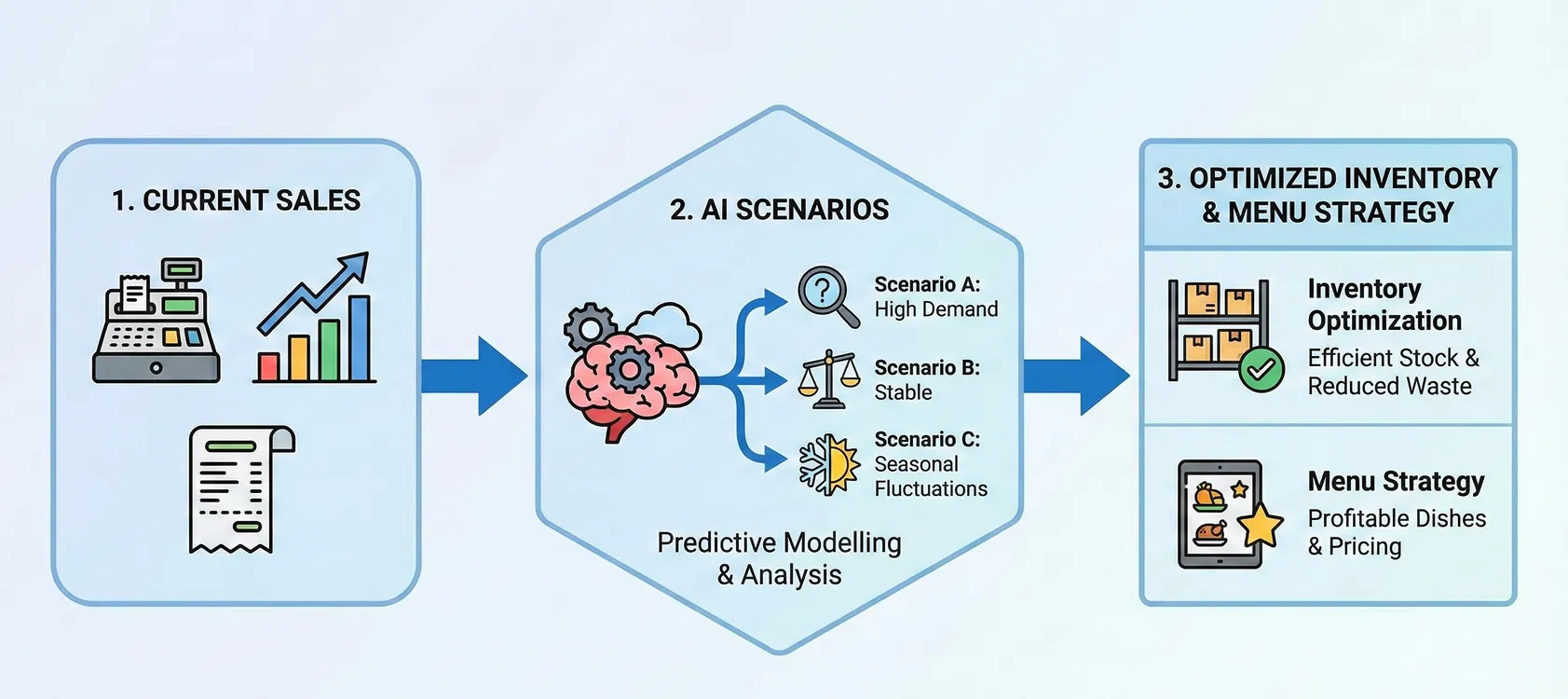
Restaurants operate in unpredictable conditions. Generative AI helps teams explore:
- Different demand scenarios
- Impact of promotions and discounts
- Staffing and inventory needs during peak seasons
Instead of reacting late, restaurants can plan confidently.
Reliable Operations With Cloud, AIOps & DevOps
High-traffic periods demand system reliability. With Public Cloud, AIOps, and DevOps, restaurant platforms remain:
- Highly available
- Scalable during rush hours
- Continuously monitored
- Secure and performance-optimized
This ensures restaurant operations never slow down when demand is highest.
Mobile & Custom Software for Faster Decisions
Through custom restaurant software and mobile applications, managers get:
- Real-time inventory and sales insights
- Faster approvals and coordination
- Access to reports from anywhere
- Better collaboration across outlets
Speed and visibility improve without adding complexity.
Responsible AI in Restaurant Operations
AI-driven decisions directly impact pricing, availability, and customer experience. Responsible AI ensures:
- Transparent recommendations
- Human oversight for critical decisions
- Fair pricing and availability
- Ethical use of customer data
Responsible AI protects both brand trust and long-term revenue.
Conclusion: From Waste Reduction to Sustainable Profitability
AI is no longer optional in modern restaurant management. By combining AI-powered demand planning, inventory optimization, automation, and analytics, restaurants can significantly reduce food waste and operate more profitably.
With platforms like Foodygent, built by Starling Elevate IT Solution, restaurants move beyond manual guesswork toward data-driven, scalable, and sustainable growth.

Build smarter restaurant operations with AI-powered management systems.Reduce food waste. Improve margins. Scale confidently.
Get StartedTable Of Contents

Driving Innovation and Impact
With engineering leadership and a proven delivery model, our journey is marked by a relentless pursuit of excellence and a commitment to driving measurable ROI for our clients across 10+ diverse industries.
Let's Connect