
Responsible AI in Legal Services: Ethics, Accountability, and Risk Management

Divya Soni
AI is transforming the legal industry from document review and legal research to contract analysis and case prediction. While these advancements improve efficiency and accuracy, they also introduce ethical, legal, and operational risks.
Introduction: Why Responsible AI Matters in Legal Services
Legal services rely on trust, confidentiality, and accountability. Without responsible AI practices, automated decisions can lead to bias, data misuse, or compliance failures. Responsible AI ensures that innovation strengthens legal processes without compromising ethics or client confidence.
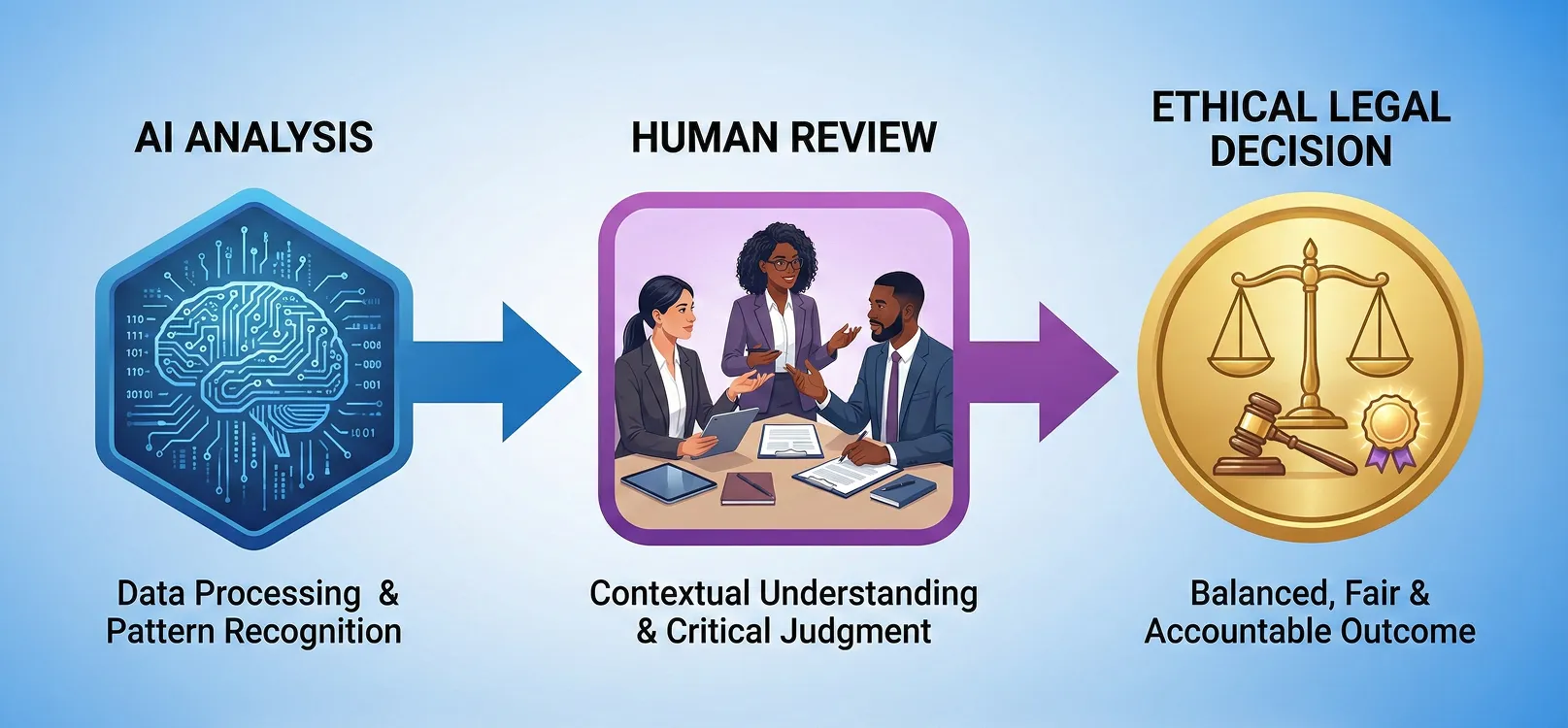
Ethical Use of AI in Legal Decision-Making
Legal outcomes can significantly impact individuals and organizations. AI systems used in legal workflows must be designed with ethical guardrails.
Responsible AI in legal services focuses on:
- Avoiding biased or unfair recommendations
- Ensuring explainable and transparent AI outputs
- Supporting human judgment rather than replacing it
- Maintaining confidentiality and data protection

Enhancing Legal Research With AI Safely
AI-powered legal research tools can scan large volumes of case law, statutes, and precedents in seconds. However, accuracy and source reliability remain critical.
With AI-enabled systems, law firms can:
- Improve research speed without compromising accuracy
- Validate insights through human oversight
- Reduce repetitive manual work
- Maintain audit trails for legal reasoning
This balance ensures faster research while preserving legal integrity.
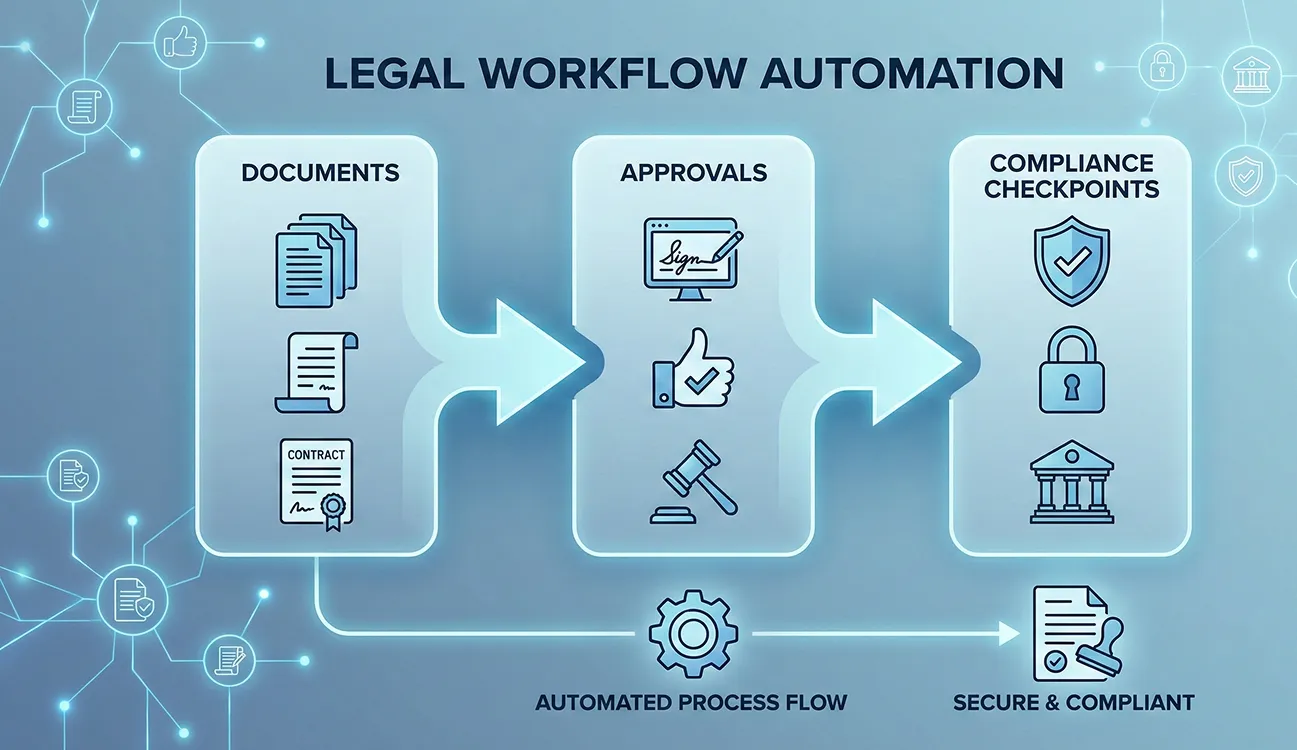
Risk Management Through AI-Powered Workflow Automation
Legal operations involve contracts, compliance checks, approvals, and deadlines. Manual workflows increase the risk of errors and delays.
AI-driven workflow automation helps:
- Track compliance requirements consistently
- Reduce missed deadlines and documentation errors
- Improve coordination across legal teams
- Maintain structured review and approval processes
Protecting Sensitive Legal Data With AI and Cloud Security
Legal data is highly sensitive. Responsible AI implementation must prioritize security at every level.
By combining AIOps, DevOps, and secure Public Cloud services, organizations can:
- Monitor systems for unusual activity
- Maintain uptime and data availability
- Ensure controlled access to legal documents
- Support compliance with data protection regulations
Strong infrastructure safeguards AI-powered legal systems from operational and security risks.
Knowledge Base Development for Legal Teams
Legal professionals depend on consistent access to policies, guidelines, and regulatory updates.
AI-powered knowledge base development enables:
- Centralized access to legal standards and best practices
- Faster onboarding of new legal staff
- Reduced reliance on informal knowledge sharing
- Improved consistency across legal decisions
Clear documentation strengthens accountability across legal teams.
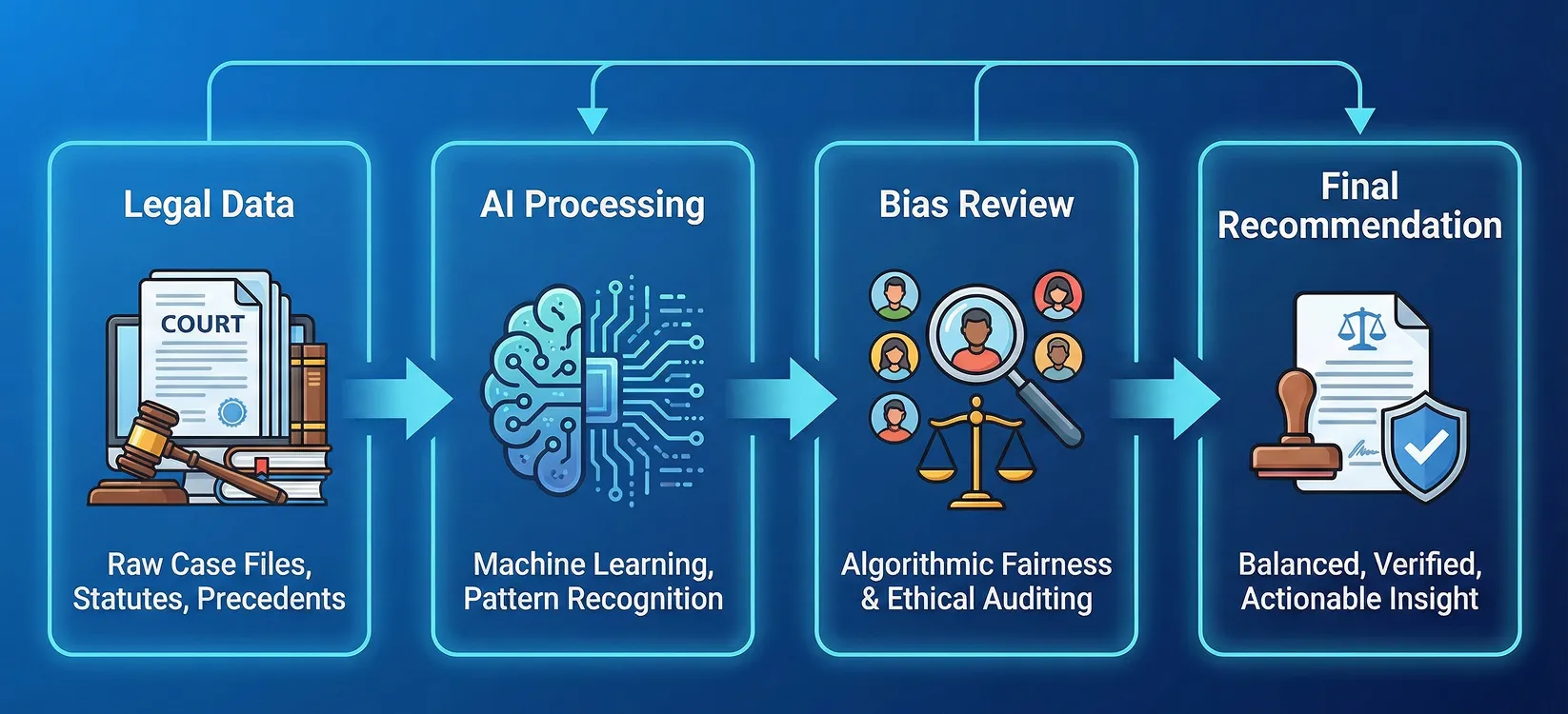
Reducing Bias With Responsible AI Design
Bias in legal AI can arise from incomplete data or flawed assumptions. Responsible AI addresses this risk through:
- Regular model evaluation and monitoring
- Diverse and representative training data
- Human validation of critical outputs
- Transparent documentation of AI limitations
This approach protects fairness while maintaining confidence in AI-assisted legal processes.
Industry Impact: Responsible AI Across Legal Services
Responsible AI supports multiple legal domains, including:
- Corporate law and compliance
- Contract management and review
- Intellectual property services
- Regulatory advisory and risk assessment
- Litigation support and case preparation
By aligning AI systems with ethical and legal standards, organizations improve both efficiency and credibility.
Conclusion: Building Trust Through Responsible Legal AI
AI offers powerful advantages for the legal industry, but its success depends on responsible use. Ethical design, transparency, accountability, and human oversight are essential to ensure AI strengthens and does not undermine legal services.
By adopting responsible AI frameworks, legal organizations can reduce risk, improve decision-making, and build long-term trust with clients and stakeholders.

Starling Elevate IT Solution helps legal organizations build secure, ethical, and AI-powered systems that balance innovation with accountability.
Get StartedTable Of Contents
Tags

Decade of Innovation and Impact
With a decade of innovation and impact, our journey has been marked by a relentless pursuit of excellence and a commitment to driving success for our clients. Over the past 10+ years, we have honed our skills and expanded our expertise across 15+ diverse industries.
Let's Connect