DevOps Automation for
AI Restaurant Platforms


Technology We Used


Project Overview
A New York restaurant technology company needed a safer way to ship ordering, reservation, and payment updates as its AI restaurant platform grew. Starling Elevate delivered DevOps automation with CI/CD pipelines, container deployments, and cloud observability so releases stayed predictable across development, staging, and production.
The three-month AIOps and DevOps engagement used Docker, Kubernetes, Terraform, GitHub Actions, and AWS monitoring to standardize how restaurant services were built, tested, and deployed.
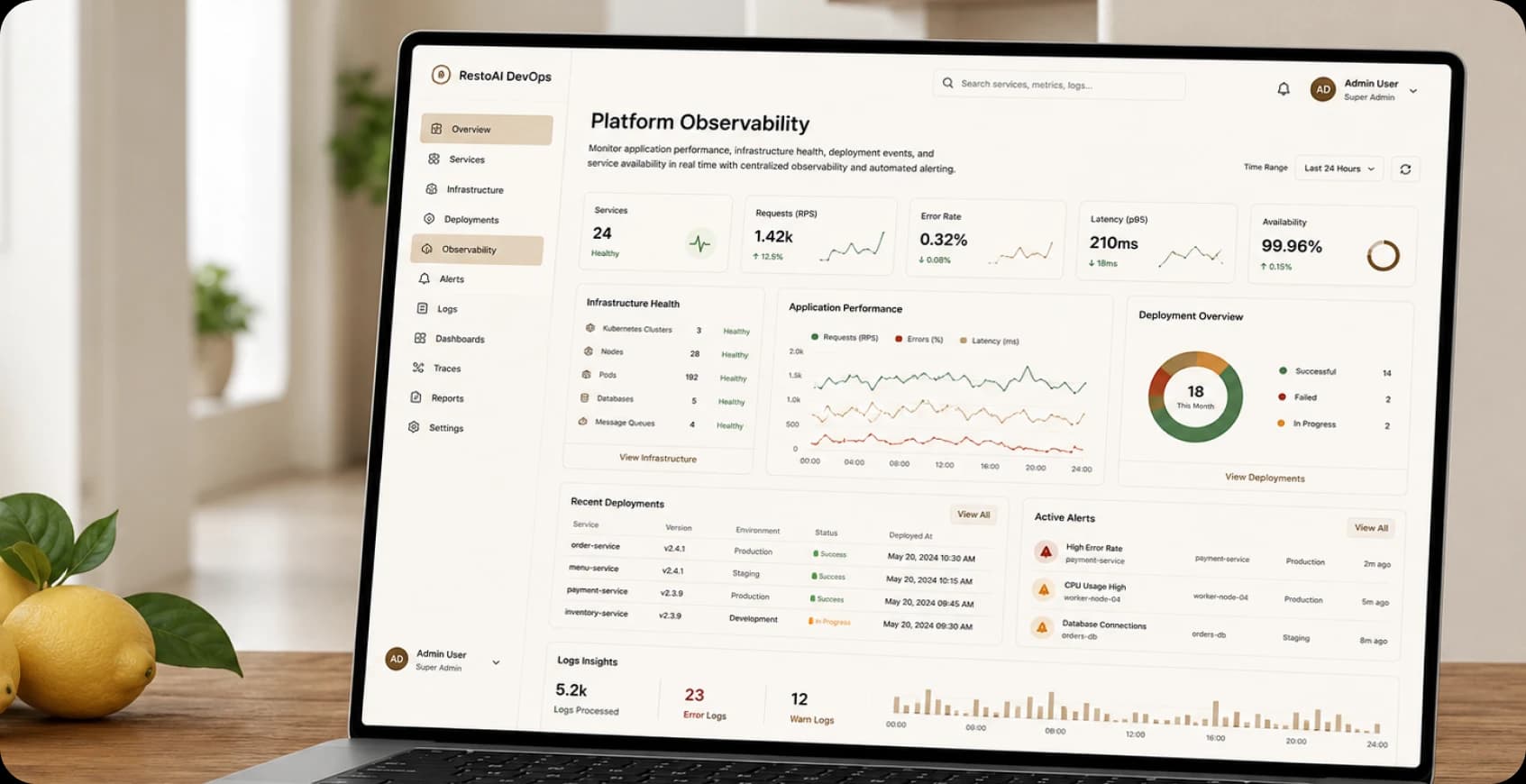
Engineering teams gained automated release validation, infrastructure as code provisioning, and centralized logging with alerts when ordering or kitchen workflows showed performance issues.
The platform covered deployment automation, container orchestration, cloud infrastructure management, rollback protection, and production monitoring for restaurant operations teams in the United States.
Why AI Restaurant Platforms Needed DevOps Automation
Restaurant platforms release new ordering, menu, and payment features often. Manual deployments, uneven environments, and limited monitoring made each release risky as traffic and locations grew. The client needed a DevOps framework that could coordinate releases and cloud changes without interrupting guest-facing services.
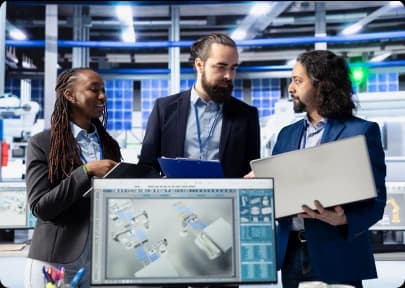
Application updates had to move through development, staging, and production without manual handoffs or conflicting release steps.

Containerized restaurant services needed matching configurations so staging tests reflected real production behavior.
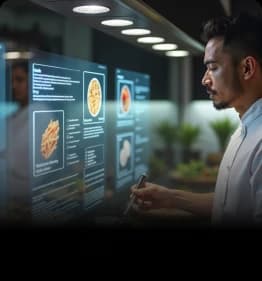
Cloud resources for new menu, loyalty, and ordering services were still provisioned manually, which slowed expansion.
Operations teams lacked a single view of application health, infrastructure load, and deployment status across environments.
Peak dining hours and feature launches increased the cost of failed deployments for ordering and restaurant management apps.
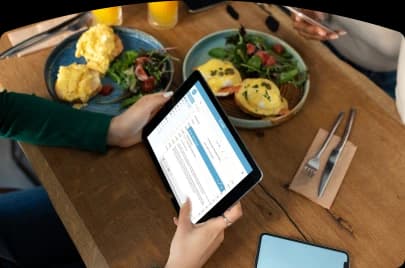
Release governance needed consistent CI/CD rules so multiple product teams could ship updates with shared quality checks.
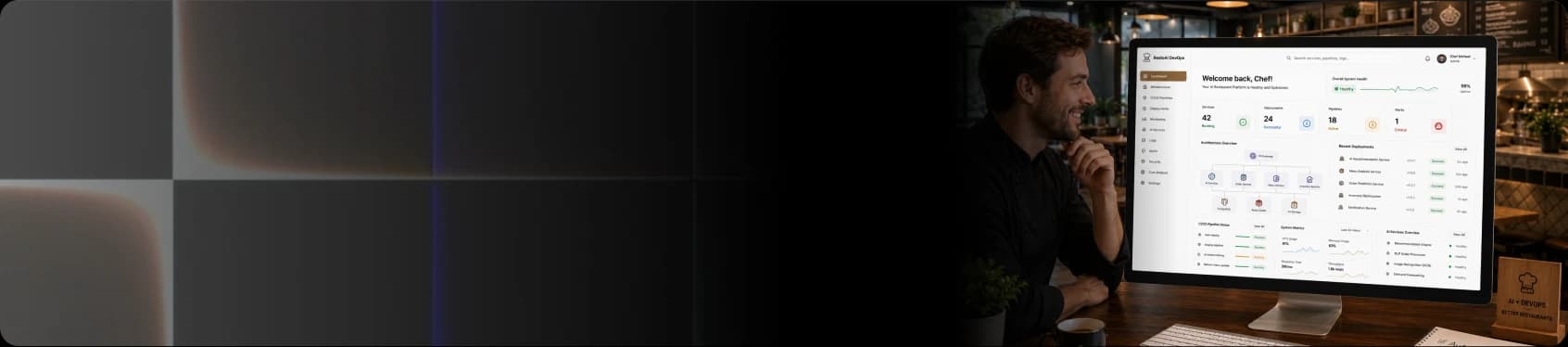
Modernize Restaurant
Application Delivery
Automate deployments, cloud infrastructure, and release pipelines for AI-powered restaurant platforms.
How We Implemented DevOps Automation for AI Restaurant Platforms
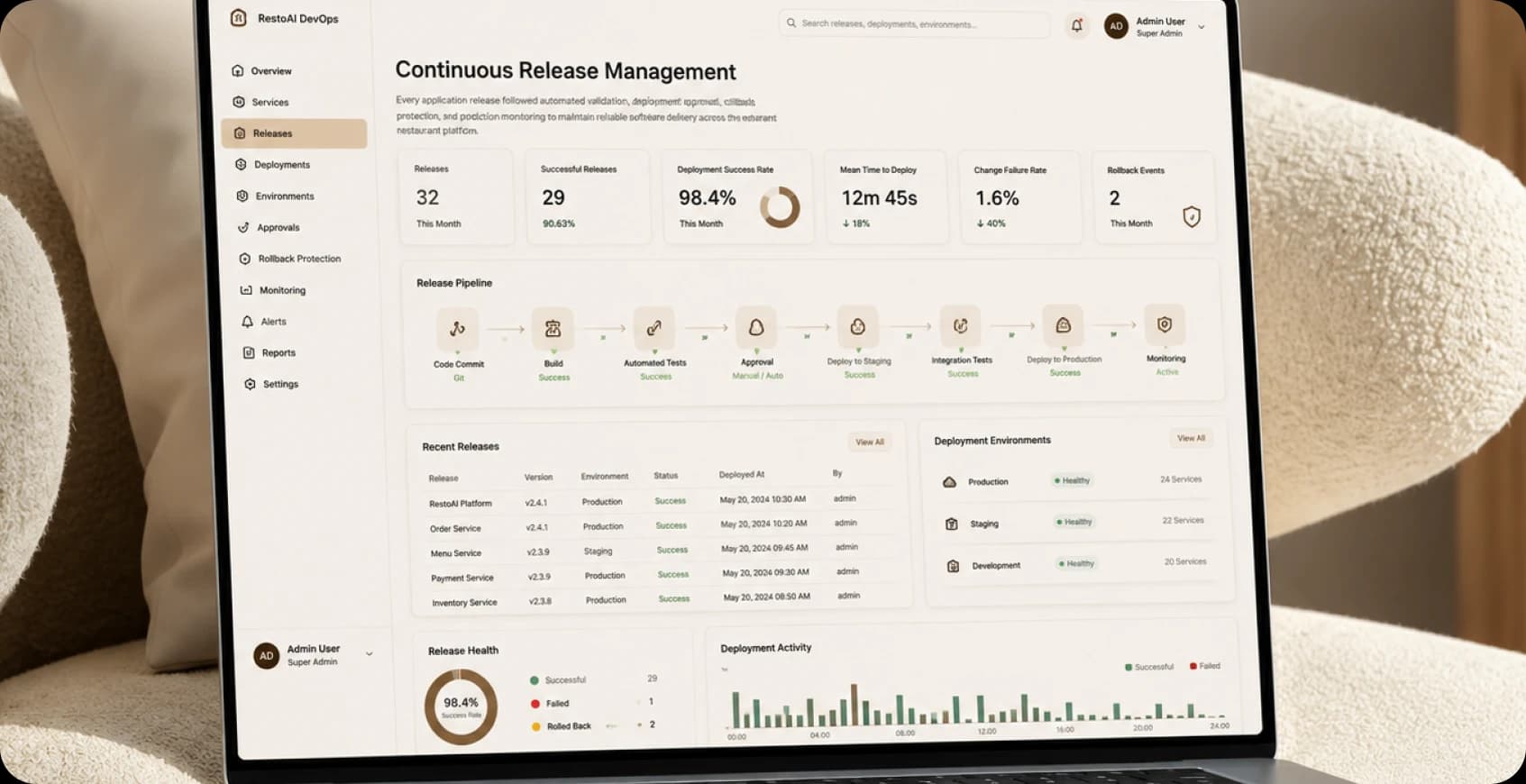
Starling Elevate designed a cloud-native delivery model that linked code changes to tested releases, automated infrastructure updates, and live platform monitoring. Each update passed through controlled pipeline stages before reaching production so guest ordering and staff tools stayed available.
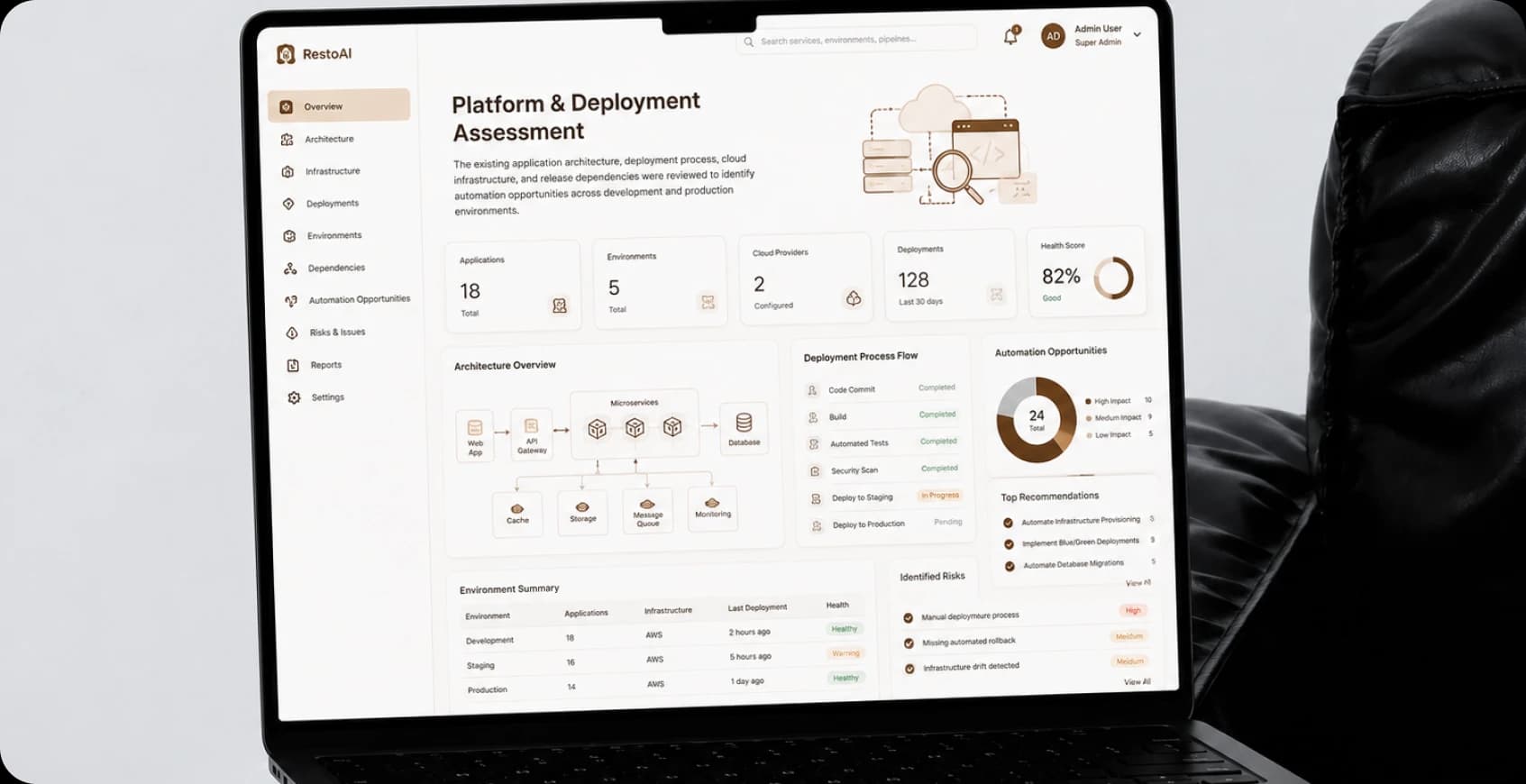
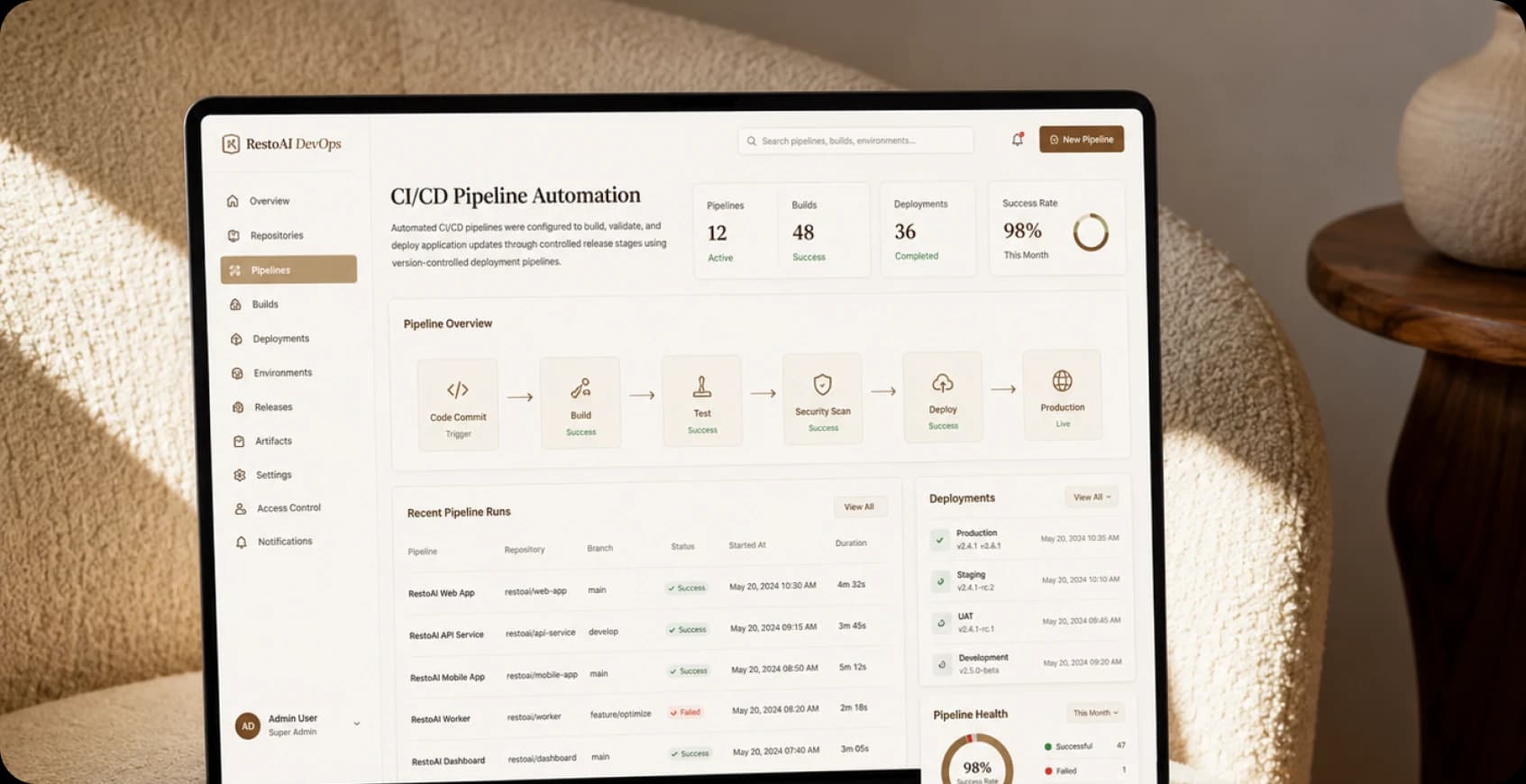
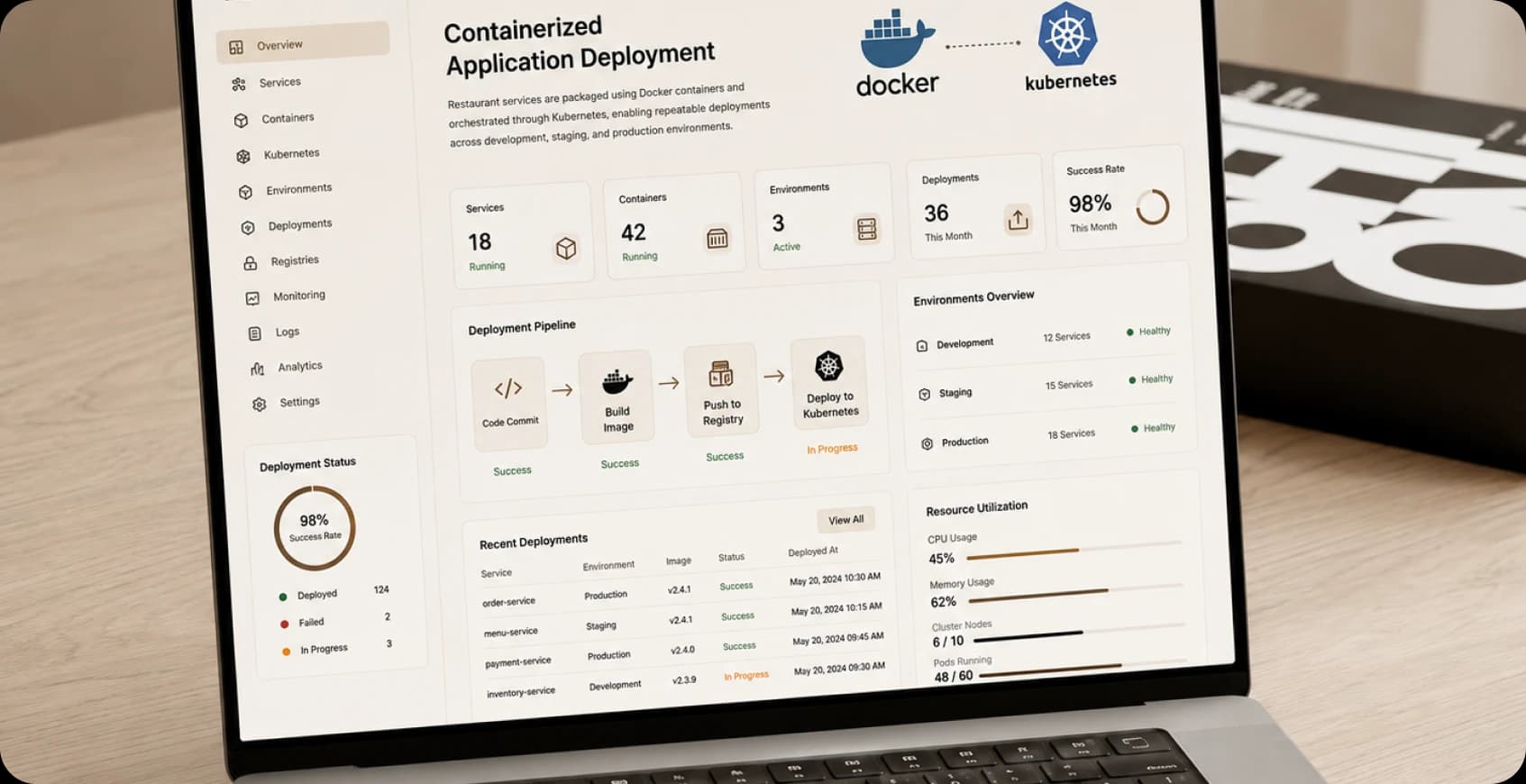
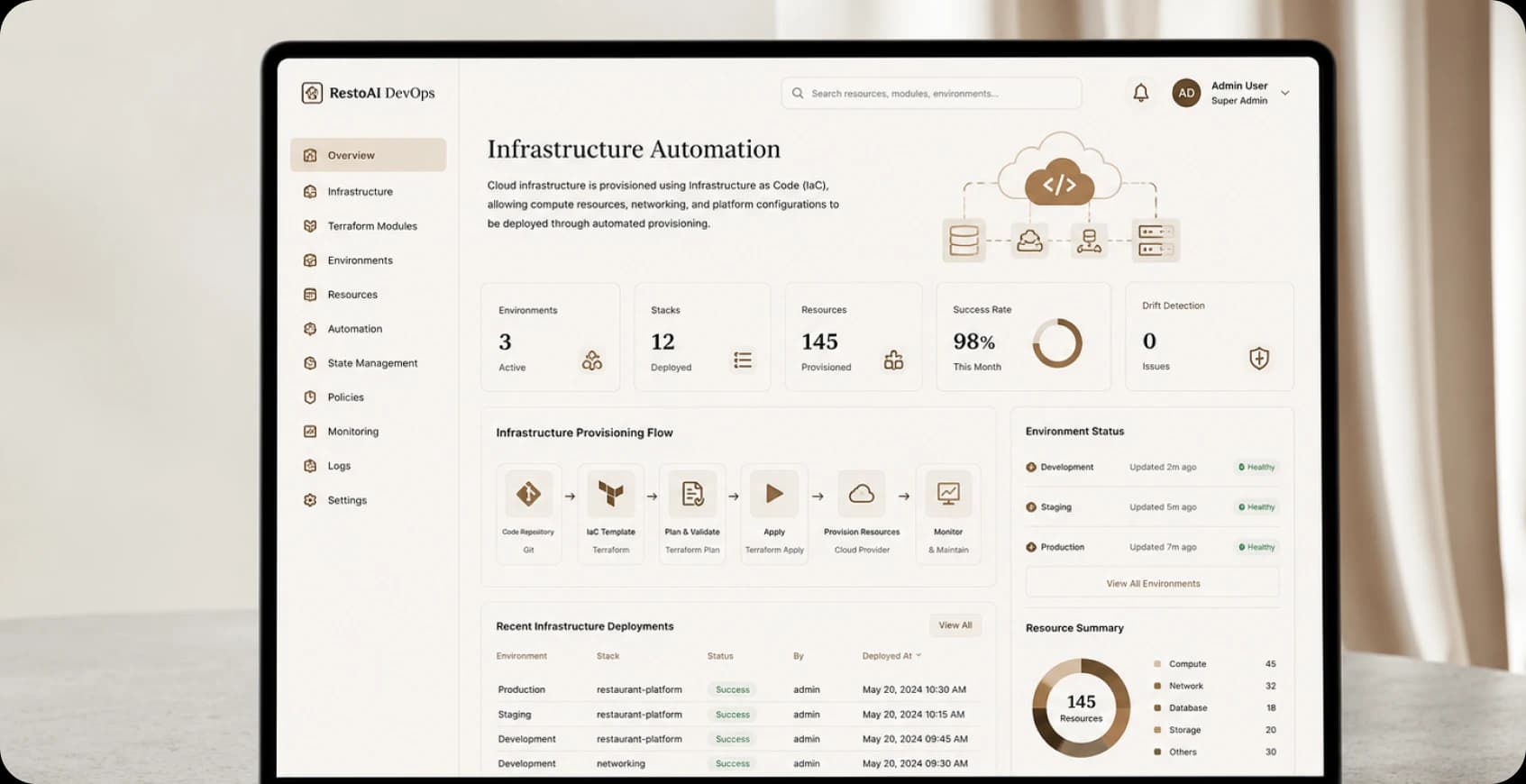
Steps
What We Delivered
Starling Elevate delivered a DevOps automation framework that modernized how the restaurant platform released software, managed AWS infrastructure, and monitored production workloads.
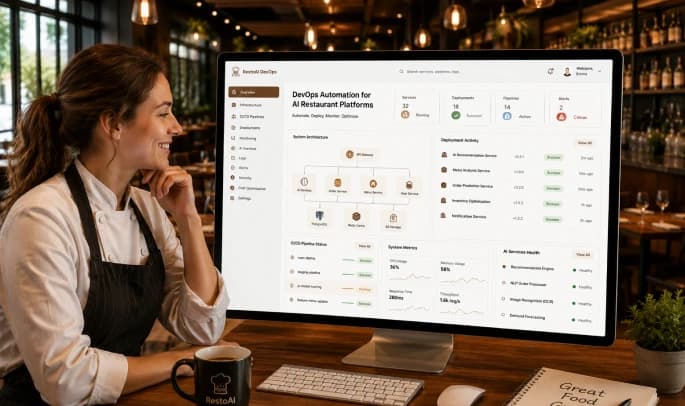
The engagement established a repeatable release model that cut manual deployment work while keeping ordering services online, traceable, and easier to govern across cloud environments.
Results &
Business
Impact
Automated pipelines and AWS infrastructure management reduced manual release tasks and gave engineering and operations staff clearer visibility into performance, deployment history, and production stability.
Automated application deployments
Reduced deployment downtime
Shorter release cycles
Improved platform availability
Standardized cloud infrastructure
Continuous deployment validation
Better application observability
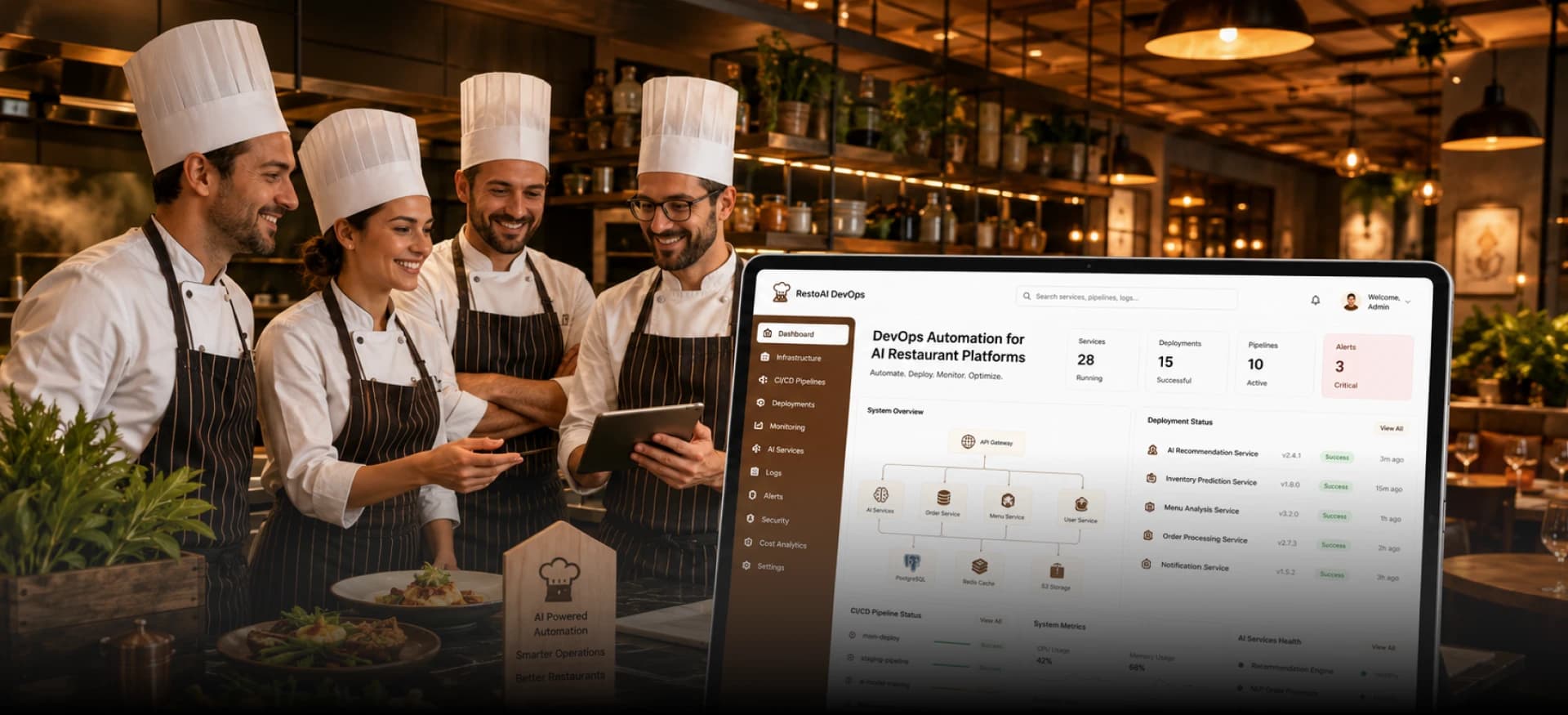
The Future of DevOps Automation for AI Restaurant Platforms
Restaurant technology teams are moving toward cloud-native delivery with smarter monitoring and faster release cycles. Next-generation platforms will combine automation with AI-assisted observability to catch infrastructure issues earlier and keep guest-facing services resilient during peak service hours.
AI-assisted infrastructure monitoring
Predictive deployment analytics
Self-healing Kubernetes clusters
Final Summary
Starling Elevate completed this DevOps automation project in three months for a New York AI restaurant platform. The work included CI/CD pipelines, Docker and Kubernetes deployments, Terraform-based AWS provisioning, and observability with Prometheus and Grafana.
The client shortened release cycles and reduced deployment downtime while improving platform availability, standardizing cloud infrastructure, and giving teams clearer visibility into production health across restaurant ordering and operations services.
Frequently asked Questions
Didn't get an answer?
We will reach out to you in less than 2 hours!
DevOps automation for AI restaurant platforms connects code changes to tested, monitored releases for ordering, reservations, and back-office tools. Starling Elevate built pipelines and cloud workflows so restaurant software teams in the United States could deploy updates with less manual effort and lower production risk.
The platform used Docker and Kubernetes for container deployments, Terraform for AWS infrastructure as code, GitHub Actions for CI/CD, and Prometheus with Grafana for metrics, dashboards, and alerting.
Starling Elevate delivered the project over three months for a New York restaurant technology company, covering pipeline setup, container orchestration, infrastructure automation, and production observability.
Deliverables included a DevOps automation framework, CI/CD pipelines, Kubernetes deployments, Terraform provisioning, deployment monitoring, centralized logging, rollback validation, and production environment management.
The client struggled with manual releases across environments, uneven staging and production setups, slow cloud provisioning, limited monitoring visibility, and higher deployment risk during peak ordering periods.
The business gained automated deployments, shorter release cycles, reduced downtime, improved platform availability, standardized AWS infrastructure, continuous deployment validation, and stronger application observability.
Didn't get an answer?
We will reach out to you in less than 2 hours!

Accelerate Restaurant Platform Delivery with DevOps
Implement DevOps automation and CI/CD pipelines for reliable restaurant application deployments and cloud infrastructure management.