Understanding AI Cloud Automation: Benefits and Business Applications

Ridhima Nigam
The future of cloud infrastructure is moving toward autonomous, AI-powered operations that can monitor, predict, and respond to issues in real time. AI agents will help manage complex workloads, while self-healing systems reduce downtime. Cloud platforms will also become more AI-ready, cost-efficient, secure, and adaptive. Humans will continue to provide the strategy, policies, and guardrails while AI handles more operational work.
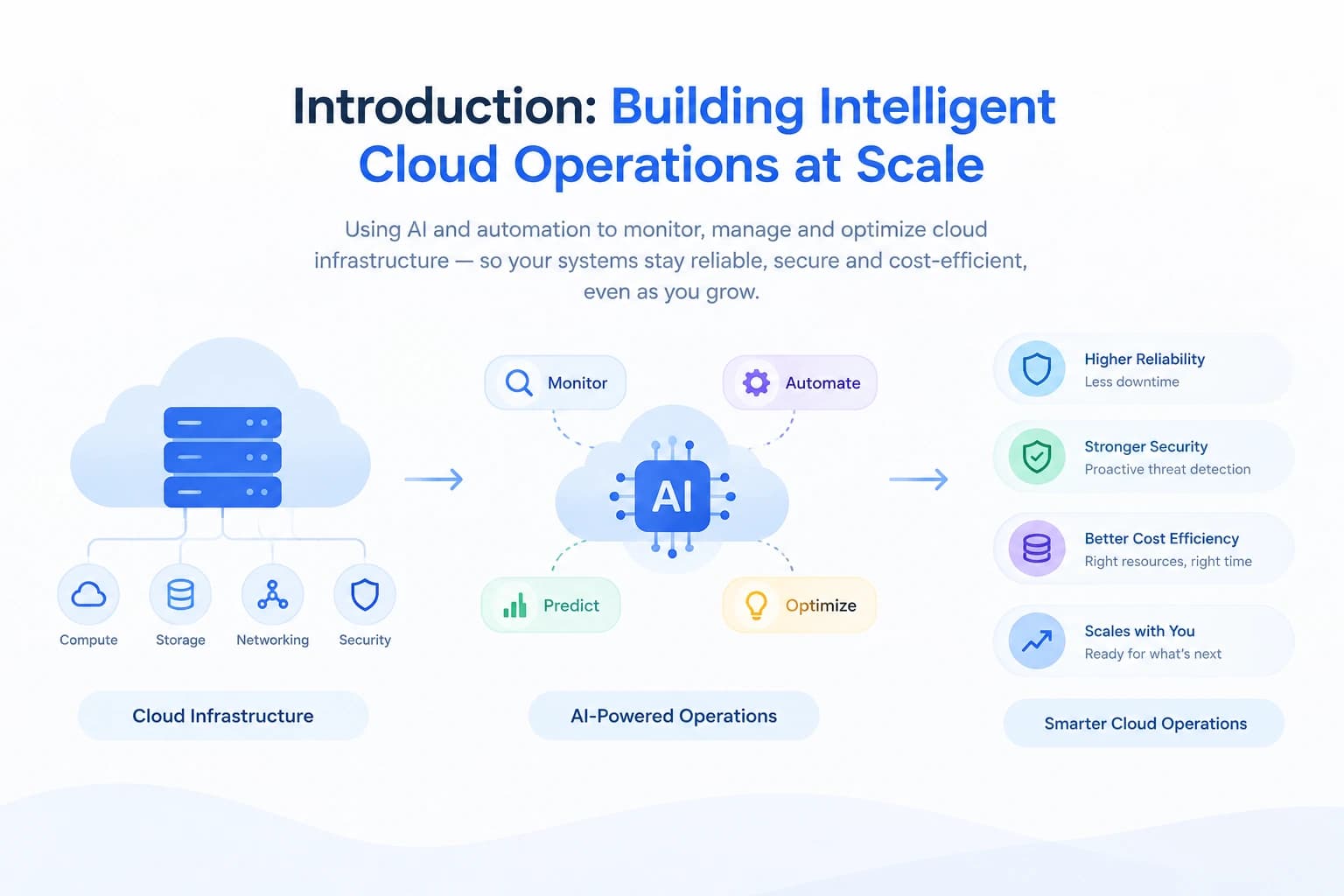
Introduction: Building Intelligent Cloud Operations at Scale
• AI makes cloud management smarter by automating repetitive tasks. • It can monitor systems continuously and detect problems early. • AI helps predict traffic and scale resources when demand changes. • It can reduce cloud costs and resource waste by optimizing usage. • Teams can spend less time fixing routine issues and more time on business and innovation. • The result is a cloud environment that is faster, more reliable, and easier to manage at scale.
What AI Cloud Automation Means for Businesses
AI cloud automation shifts cloud operations from reactive to predictive. Instead of relying on manual commands or fixed rules, intelligent AI agents monitor your cloud environment, detect issues early, and take action automatically. This includes scaling resources, routing workloads, and fixing problems before they cause downtime. For businesses, this means fewer outages, lower cloud costs, and more time for teams to focus on innovation instead of routine troubleshooting.
| Area | Traditional Cloud | AI Cloud Automation |
|---|---|---|
| Monitoring | People check systems and alerts. | AI watches systems automatically. |
| Scaling | Teams adjust resources when needed. | AI adds or removes resources automatically. |
| Problems | Engineers find and fix issues manually. | AI can detect and respond to issues quickly. |
| Costs | Teams check where money is being spent. | AI finds unused resources and reduces waste. |
| Performance | Problems are often handled after they happen. | AI can predict problems before they happen. |
| Daily Work | More repetitive manual tasks. | More tasks are handled automatically. |
Key Capabilities That Drive Intelligent Cloud Automation
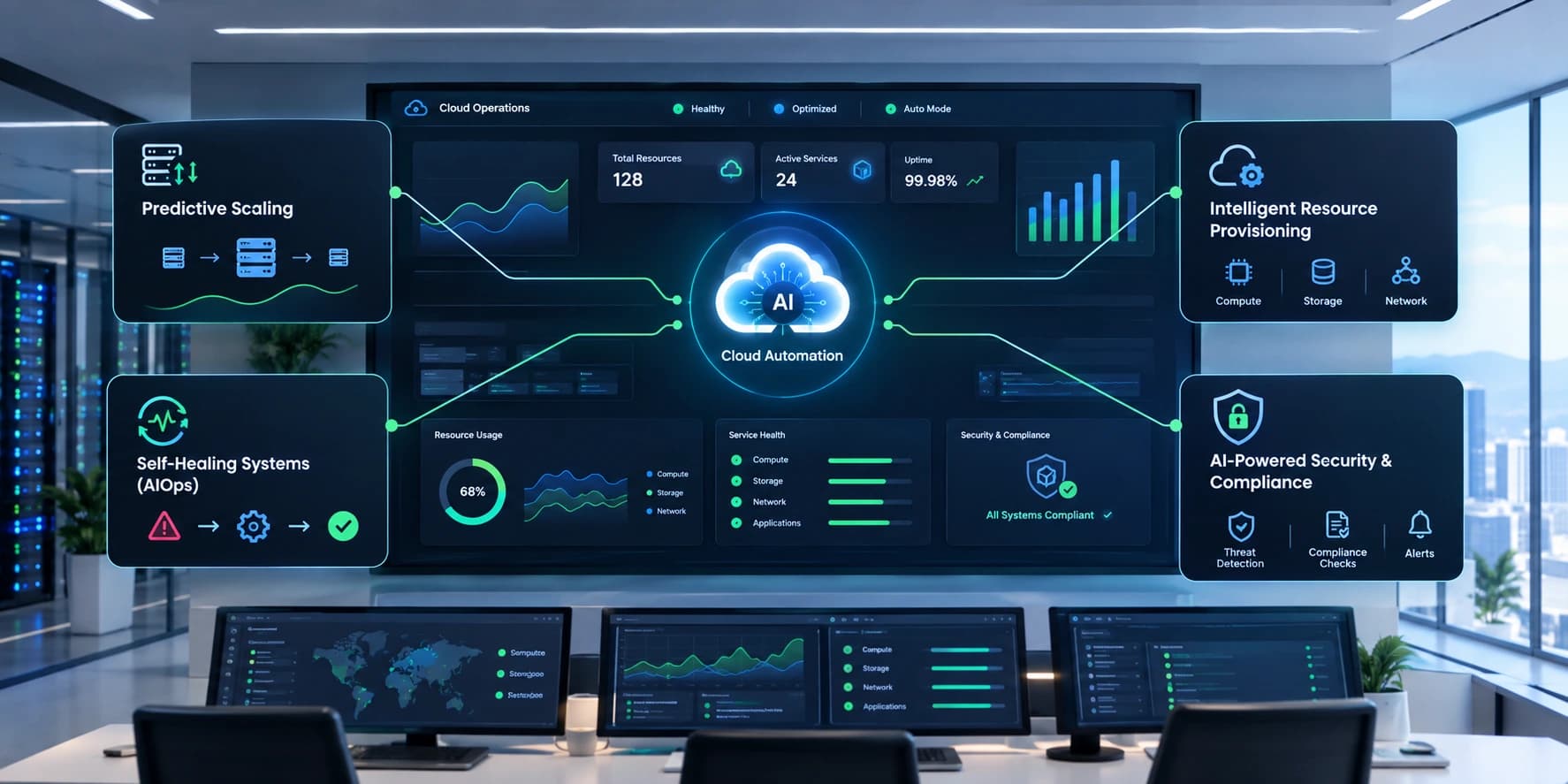
Adding AI to cloud platforms brings powerful capabilities that keep operations running smoothly and efficiently. • Predictive Scaling: AI predicts traffic demand and allocates resources ahead of time, preventing slowdowns before they happen. • Intelligent Resource Provisioning: AI automatically selects the most cost-effective resources for each workload, reducing waste. • Self-Healing Systems (AIOps): AI detects issues in real time, finds the root cause, and fixes them automatically - without waiting for human intervention. • AI-Powered Security & Compliance: AI identifies unusual activity and security threats instantly, taking automated action to protect your environment.
“AI-powered cloud automation turns infrastructure into an intelligent, self-optimizing engine for business.”
— Starling Elevate
Business Benefits of AI Cloud Automation
Transitioning to AI-driven cloud automation delivers measurable improvements across performance, cost, and team velocity, directly impacting the bottom line.

Lower Cloud Bills
AI automatically turns off idle resources and optimizes server sizes in real time, cutting cloud spend by 30% to 50%
Fewer Outages & Higher Uptime
Self-healing AI detects and fixes system issues before customers notice, keeping applications running 24/7
Faster Software Delivery
Automated testing and smart deployments help engineering teams launch new features safely and quickly
More Time for Innovation
Routine maintenance runs on autopilot, freeing your technical team to focus on high-value business goals
Practical Business Application - AI-Powered Auto Scaling
Instead of manually increasing servers when traffic rises, AI monitors demand and automatically adjusts cloud resources.
Business Value:
• Handles Traffic Spikes Automatically: Scales up infrastructure in advance so your applications never experience slowdowns or downtime. • Reduces Unnecessary Cloud Costs: Scales down idle resources automatically during low-demand periods to eliminate wasted budget. • Keeps Applications Responsive: Maintains low latency and optimal speed for all end users at peak load. • Minimizes Manual Infrastructure Work: Removes repetitive DevOps tasks and manual firefighting from your engineering team's plate.
The Role of Human Oversight in AI Automation
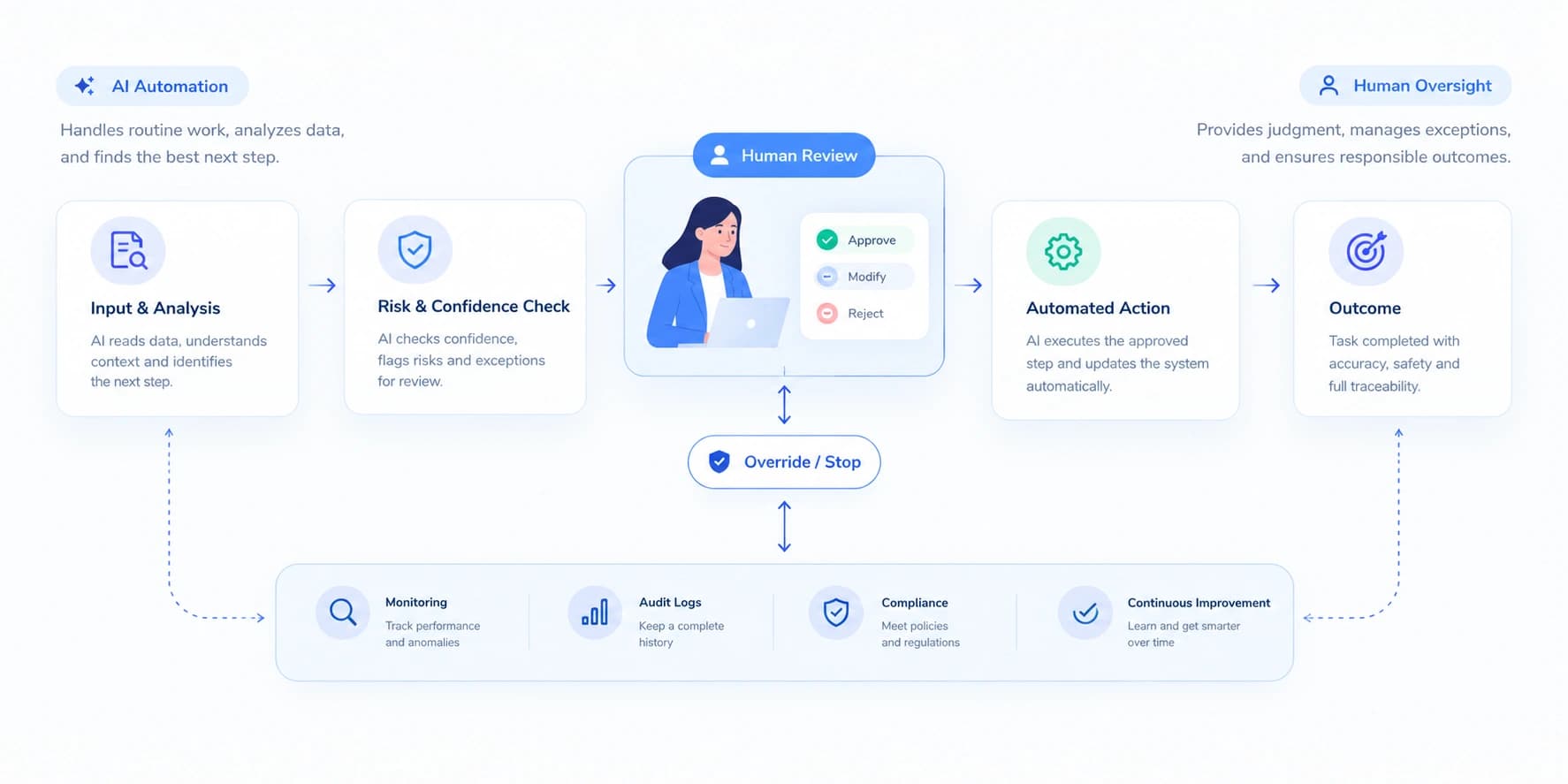
AI can automate cloud operations, but human expertise is still essential. Humans set business rules, security, compliance, and system boundaries. The best approach combines AI’s speed and automation with human experience and decision-making.
Key Considerations Before Implementation
• Security: Protect sensitive data and access. • Cost: Make sure automation saves more than it costs. • Integration: Ensure it works with existing cloud systems. • Human Oversight: Keep humans involved in important decisions.
The Future of Intelligent Cloud Infrastructures
The trajectory of cloud computing is unmistakably autonomous. In the near future, intelligent systems will manage and optimize cloud lifecycles automatically. • AI-Powered Automation - AI will handle more cloud tasks automatically. • Predictive Operations - Systems will detect issues before they become problems. • Real-Time Scaling - Resources will automatically adjust to changing demand. • Smarter Cost Control - AI will identify and reduce unnecessary cloud spending. • Built-In Security - Intelligent systems will continuously detect and respond to threats. • AI Agents in Operations - AI agents will help manage complex infrastructure workflows. • Cloud + Edge Computing - Workloads will run closer to users for faster responses. • Human + AI Collaboration - AI handles repetitive work while humans control strategy and governance.
Conclusion
AI cloud automation is a fundamental shift in how businesses leverage technology. It evolves cloud infrastructure from a static utility into a dynamic, strategic asset. By embracing predictive scaling, intelligent provisioning, and autonomous remediation, organizations can reduce costs while driving unprecedented performance and reliability.
Build Intelligent Cloud Systems with Starling Elevate
At Starling Elevate IT Solution, we specialize in transforming legacy cloud setups into intelligent, automated environments. We apply cutting-edge AI and AIOps methodologies to streamline your operations, drive down costs, and future-proof your infrastructure. Partner with us to turn your cloud environment into a competitive advantage.

Connect with us to transform your cloud infrastructure into a high performing, AI-driven system.
Get StartedFrequently Asked Questions
Traditional cloud automation relies on rigid, rule-based scripts (if-this-then-that) that require manual maintenance. AI cloud automation uses machine learning models and autonomous agents to predict system bottlenecks, dynamically rightsize resources, and self-heal infrastructure without requiring human intervention.
Table Of Contents

Driving Innovation and Impact
With engineering leadership and a proven delivery model, our journey is marked by a relentless pursuit of excellence and a commitment to driving measurable ROI for our clients across 10+ diverse industries.
Let's Connect